











Help Polar Bear
Infographics- Polar Bear in Arctic Sea Illustration by Jeeyoung
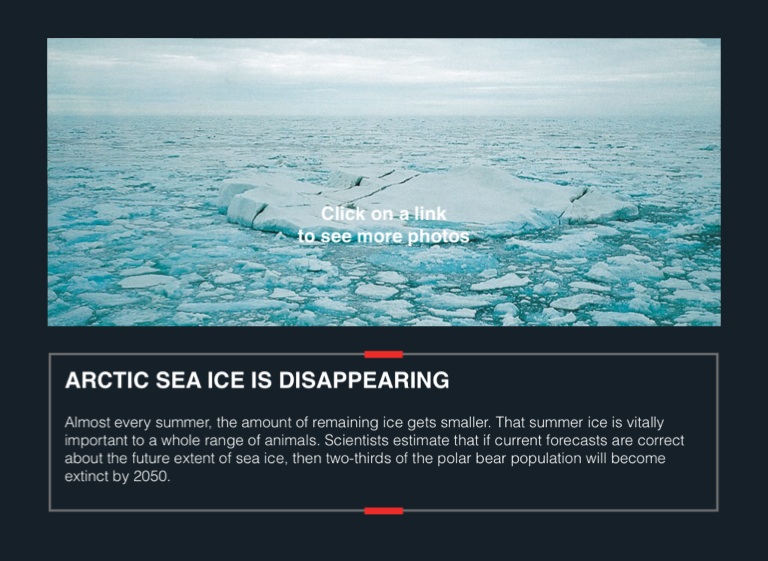
ARCTIC SEA ICE IS DISAPPEARING
Click on a link to see more photos
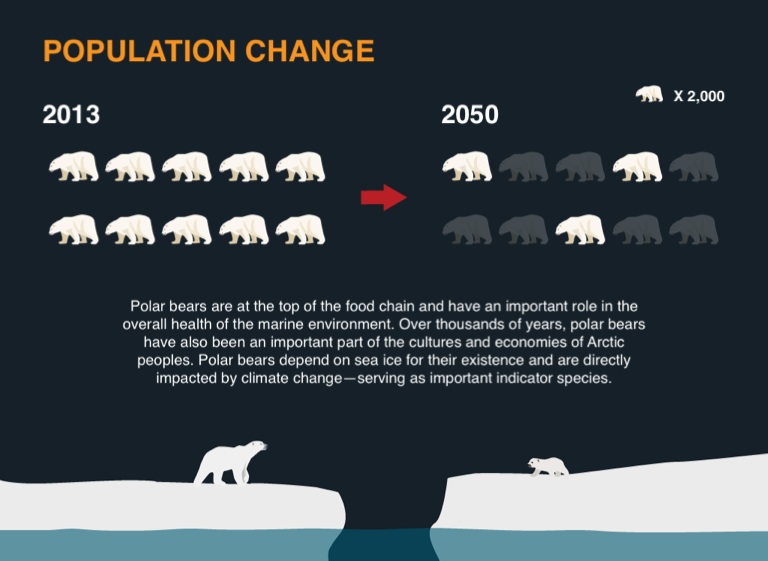
Almost every summer, the amount of remaining ice gets smaller. That summer ice is vitally important to a whole range of animals. Scientists estimate that if current forecasts are correct about the future extent of sea ice, then two-thirds of the polar bear population will become extinct by 2050.
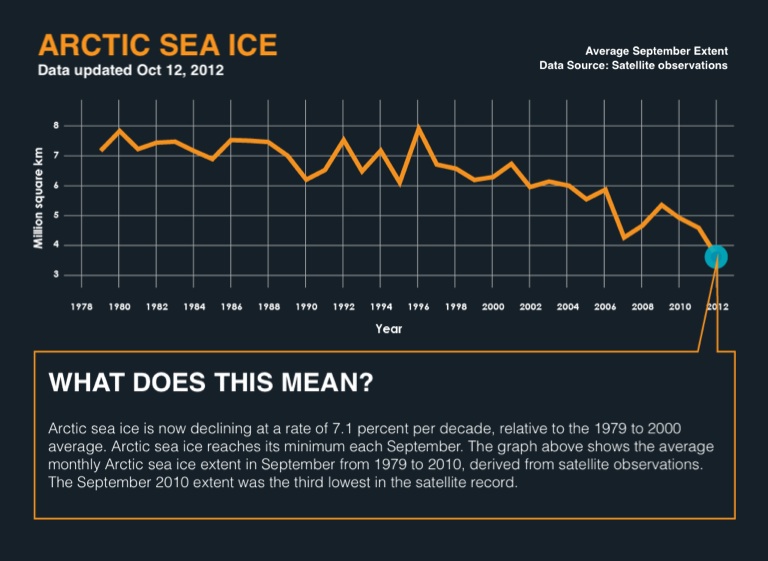
ARCTIC SEA ICE
Average September Extent Data Source: Satellite observations
Data updated Oct 12, 2012
WHAT DOES THIS MEAN?
Arctic sea ice is now declining at a rate of 7.1 percent per decade, relative to the 1979 to 2000 average. Arctic sea ice reaches its minimum each September. The graph above shows the average monthly Arctic sea ice extent in September from 1979 to 2010, derived from satellite observations. The September 2010 extent was the third lowest in the satellite record.
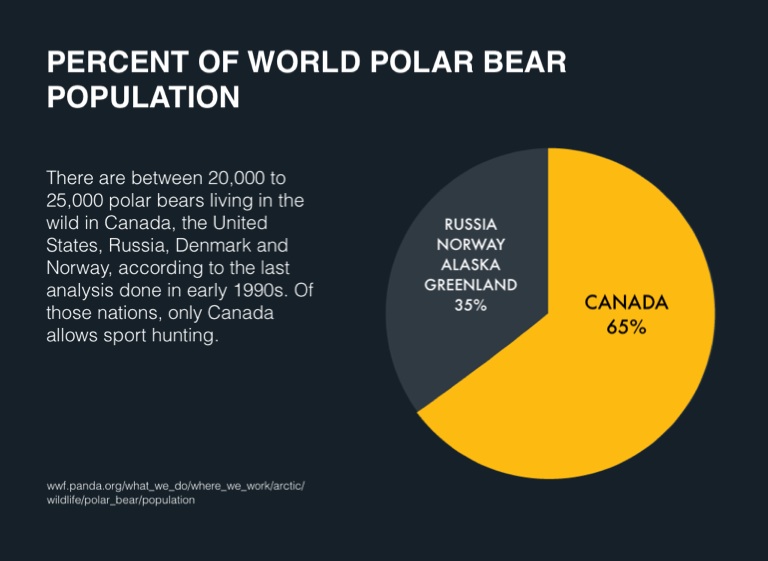
PERCENT OF WORLD POLAR BEAR POPULATION
There are between 20,000 to 25,000 polar bears living in the wild in Canada, the United States, Russia, Denmark and Norway, according to the last analysis done in early 1990s. Of those nations, only Canada allows sport hunting.
RUSSIA NORWAY ALASKA GREENLAND 35%
CANADA 65%
wwf.panda.org/what_we_do/where_we_work/arctic/wildlife/polar_bear/population
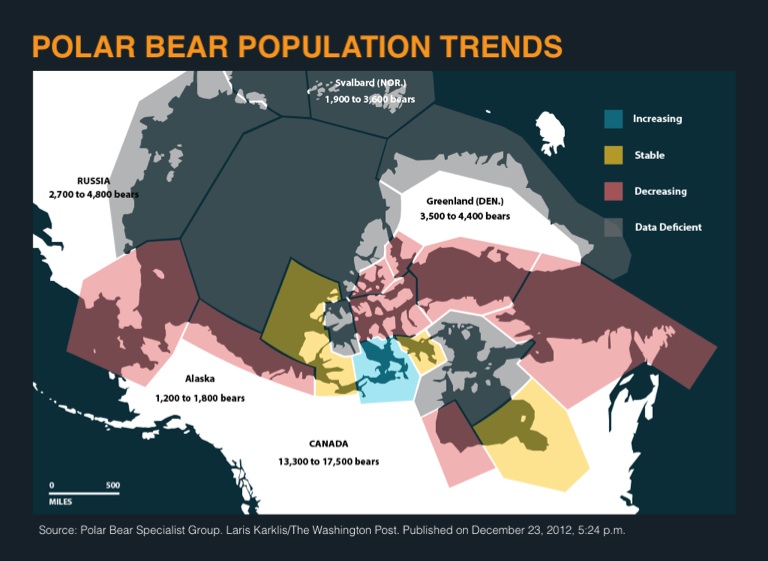
POLAR BEAR POPULATION TRENDS
Source: Polar Bear Specialist Group. Laris Karklis/The Washington Post. Published on December 23, 2012, 5:24 p.m.
POPULATION CHANGE
X 2,000
2013
2050
Polar bears are at the top of the food chain and have an important role in the overall health of the marine environment. Over thousands of years, polar bears have also been an important part of the cultures and economies of Arctic peoples. Polar bears depend on sea ice for their existence and are directly impacted by climate change—serving as important indicator species.
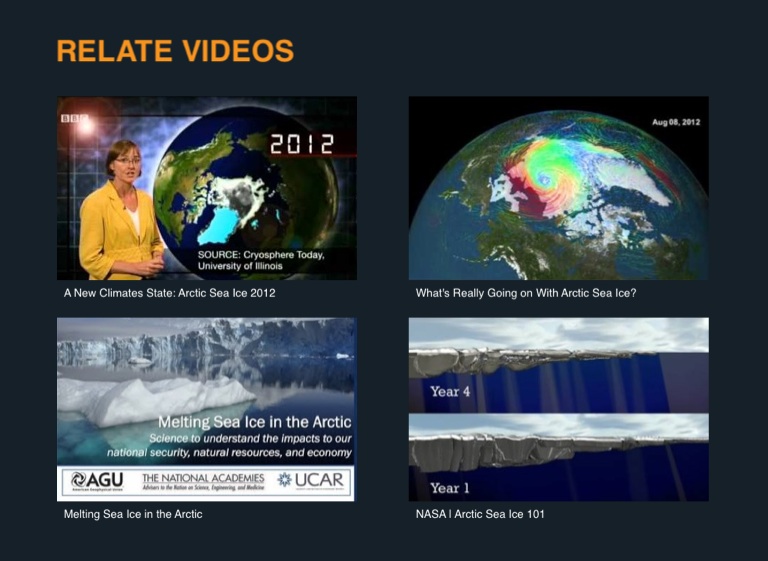
RELATE VIDEOS
A New Climates State: Arctic Sea Ice 2012
What's Really Going on With Arctic Sea Ice?
Melting Sea Ice in the Arctic
NASA | Arctic Sea Ice 101