







Income Inequality in America: Crisis of the 2020s
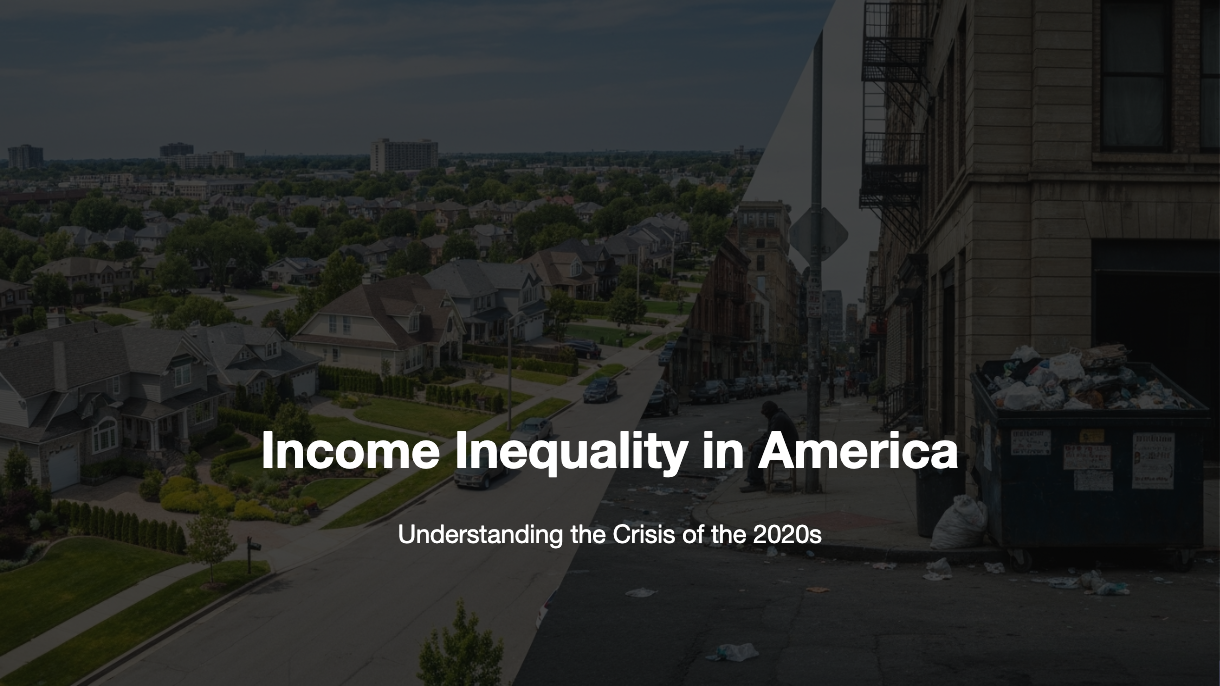
Income Inequality in America
Understanding the Crisis of the 2020s
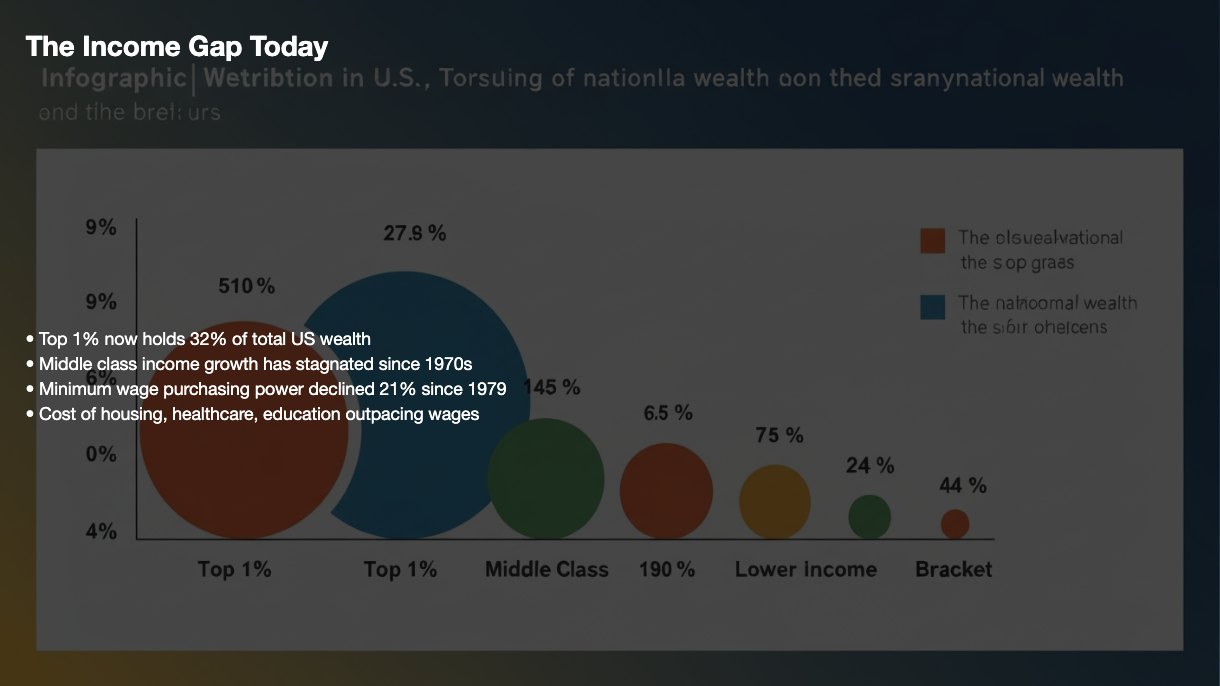
The Income Gap Today
• Top 1% now holds 32% of total US wealth • Middle class income growth has stagnated since 1970s • Minimum wage purchasing power declined 21% since 1979 • Cost of housing, healthcare, education outpacing wages
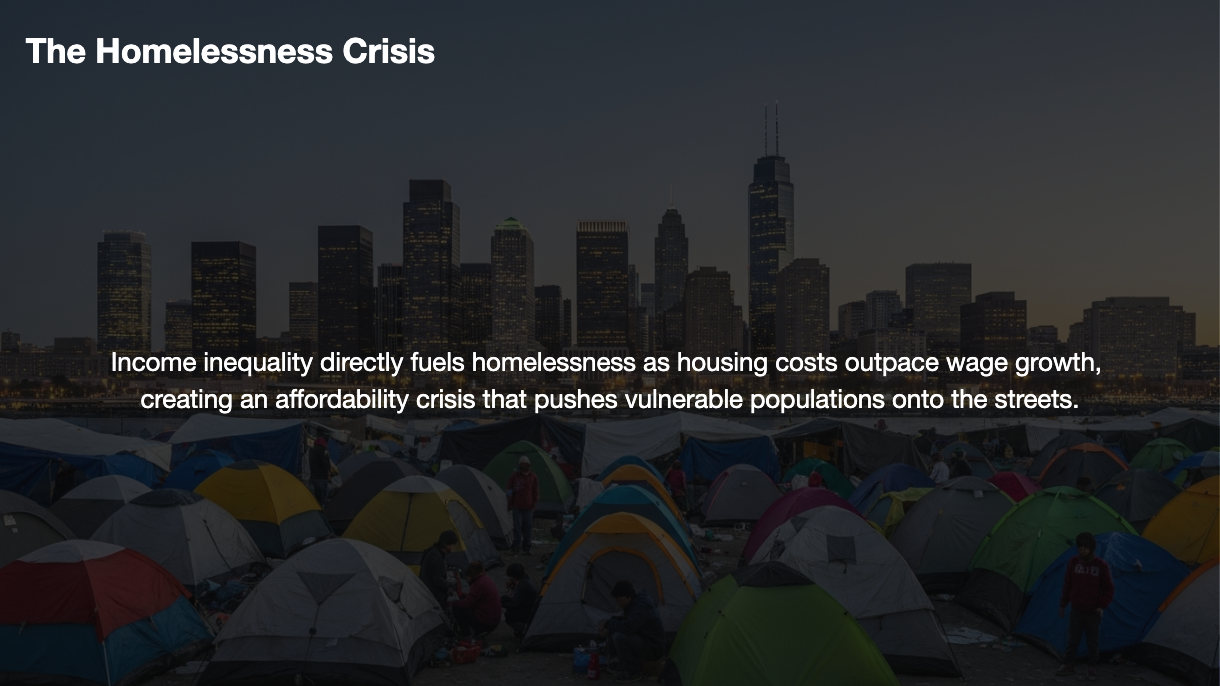
The Homelessness Crisis
Income inequality directly fuels homelessness as housing costs outpace wage growth, creating an affordability crisis that pushes vulnerable populations onto the streets.
Economic Despair and Substance Abuse
• Overdose deaths peaked at 107,000+ annually • Rural and post-industrial areas most affected • Unemployment and drug abuse rates strongly correlated • Mental health services often unavailable in struggling communities
Communities hit hardest by economic decline show the highest rates of drug abuse, creating what experts call 'deaths of despair.'
Every 1% increase in unemployment correlates with a 3.6% increase in overdose deaths
Pathways to Solutions
1. Raise minimum wage to living wage standards ($15-20/hour) 2. Expand affordable housing through public-private partnerships 3. Strengthen social safety net and mental health services 4. Progressive taxation to fund education and job training 5. Support small business and cooperative ownership models