






Python: The Language That Changed Programming
Python: The Language That Changed Programming
Understanding Python's Rise to Global Adoption
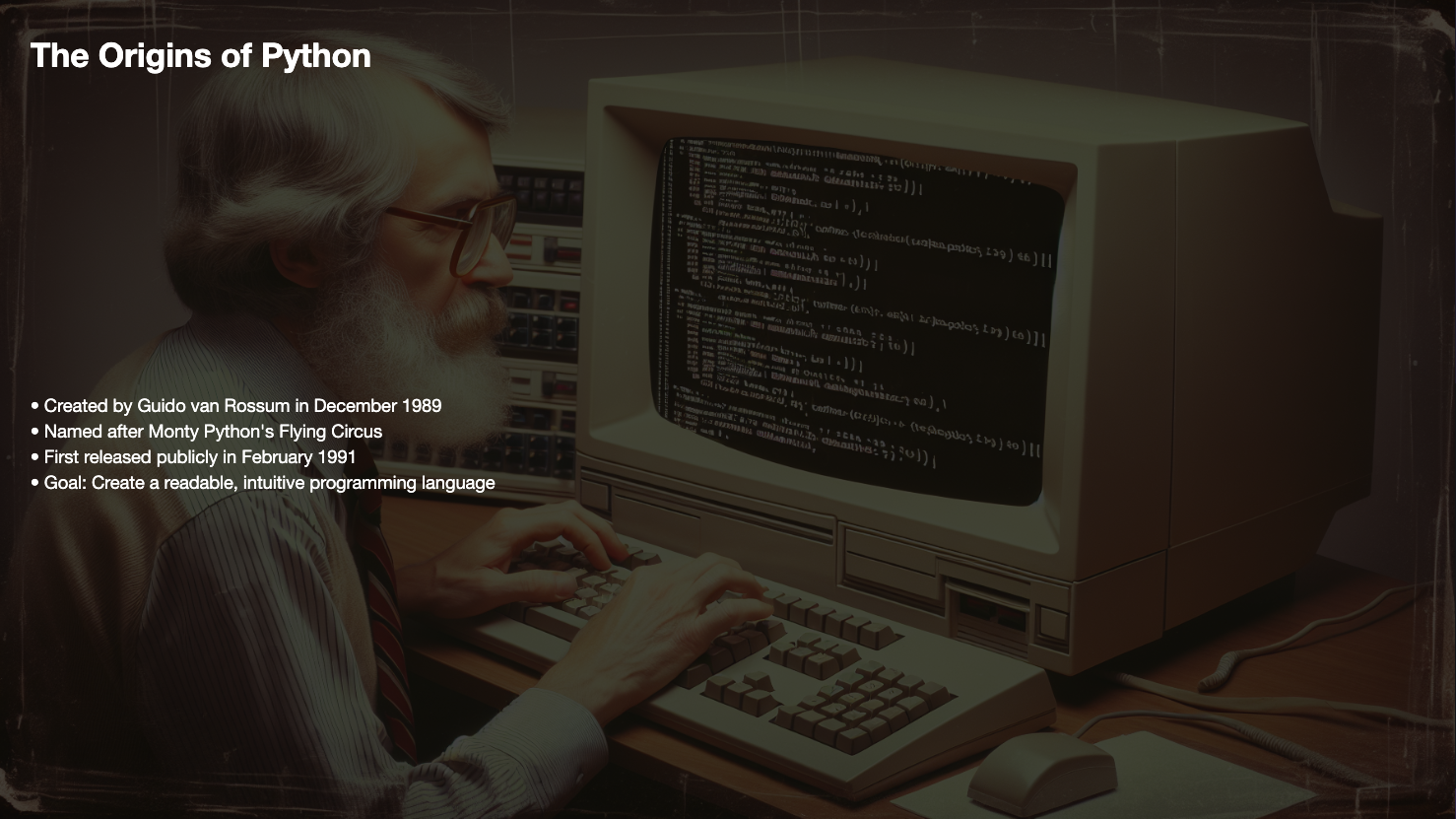
The Origins of Python
• Created by Guido van Rossum in December 1989 • Named after Monty Python's Flying Circus • First released publicly in February 1991 • Goal: Create a readable, intuitive programming language
"Beautiful is better than ugly. Explicit is better than implicit. Simple is better than complex." — The Zen of Python by Tim Peters
This philosophy shaped Python's design from day one, emphasizing code readability and developer happiness over complex syntax.
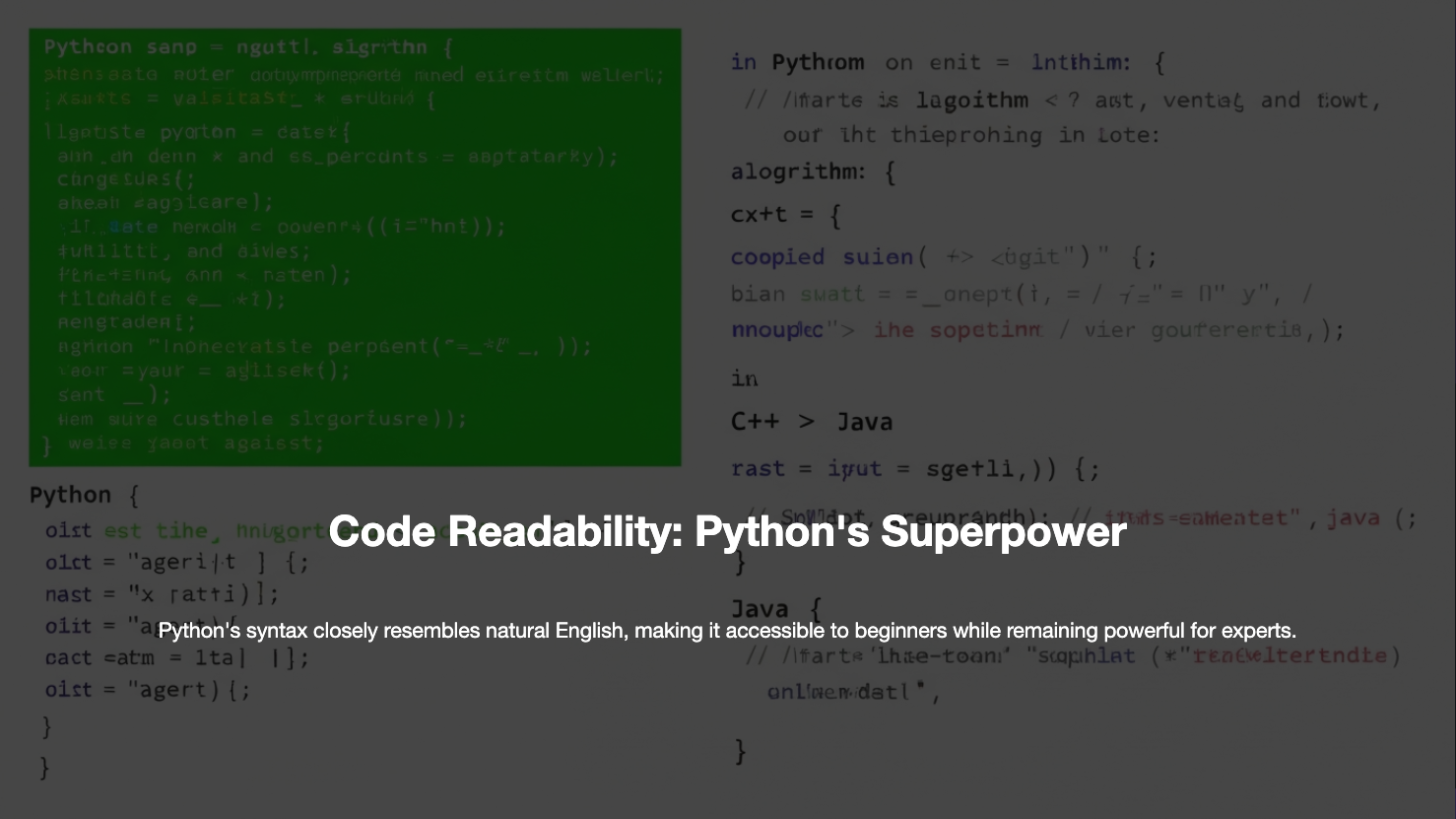
Code Readability: Python's Superpower
Python's syntax closely resembles natural English, making it accessible to beginners while remaining powerful for experts.
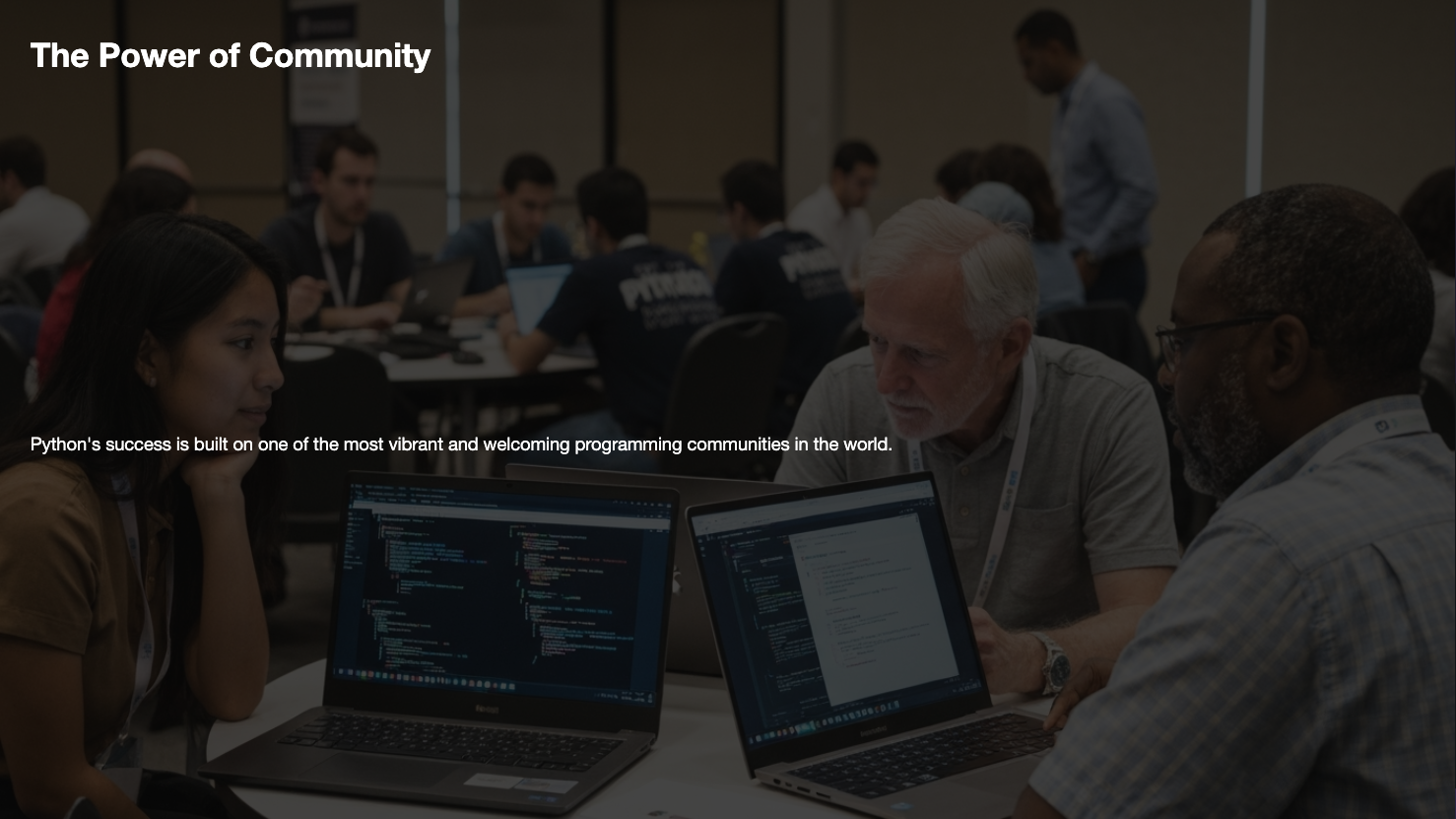
The Power of Community
Python's success is built on one of the most vibrant and welcoming programming communities in the world.
Open Source Excellence
• Thousands of core contributors over 30+ years • Python Enhancement Proposals (PEPs) for transparent decision-making • Corporate sponsorship from Google, Microsoft, and others • Volunteer-driven development with professional oversight
Fun fact: Python's development is funded by donations and corporate sponsors, ensuring it remains free and open for everyone.
Python's development model showcases the best of open source collaboration.
Python's Data Revolution
How Python became the language of data science
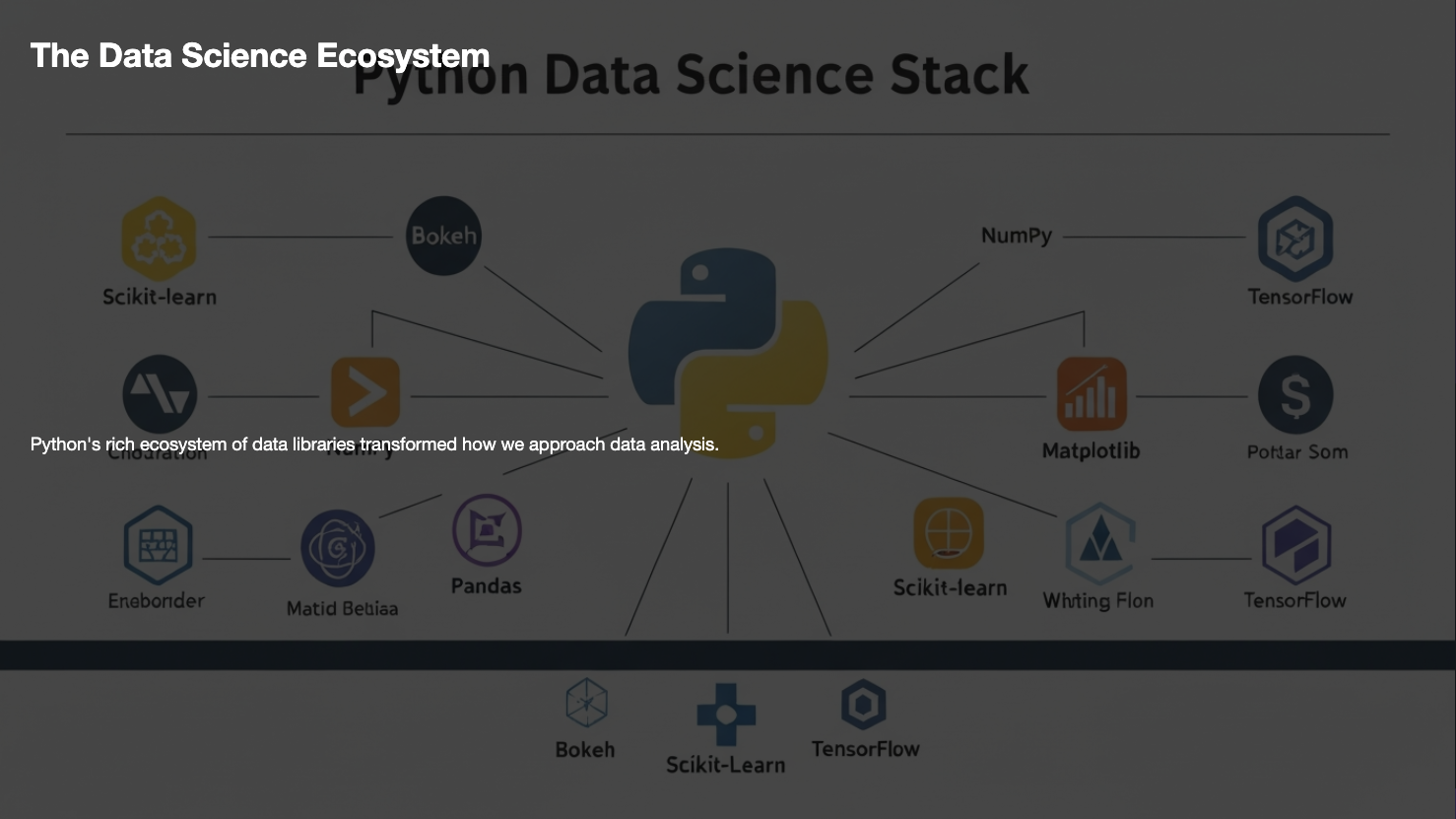
The Data Science Ecosystem
Python's rich ecosystem of data libraries transformed how we approach data analysis.
Real-World Data Impact
Python powers data analysis across industries:
Python's Enduring Success
Python's combination of simplicity, community, and versatility has made it one of the most beloved programming languages.
Whether you're a beginner learning to code or a data scientist building the next breakthrough model, Python provides the tools and community to help you succeed.